

How Digital Publishing Platforms Are Transforming Content Distribution and Reader Engagement

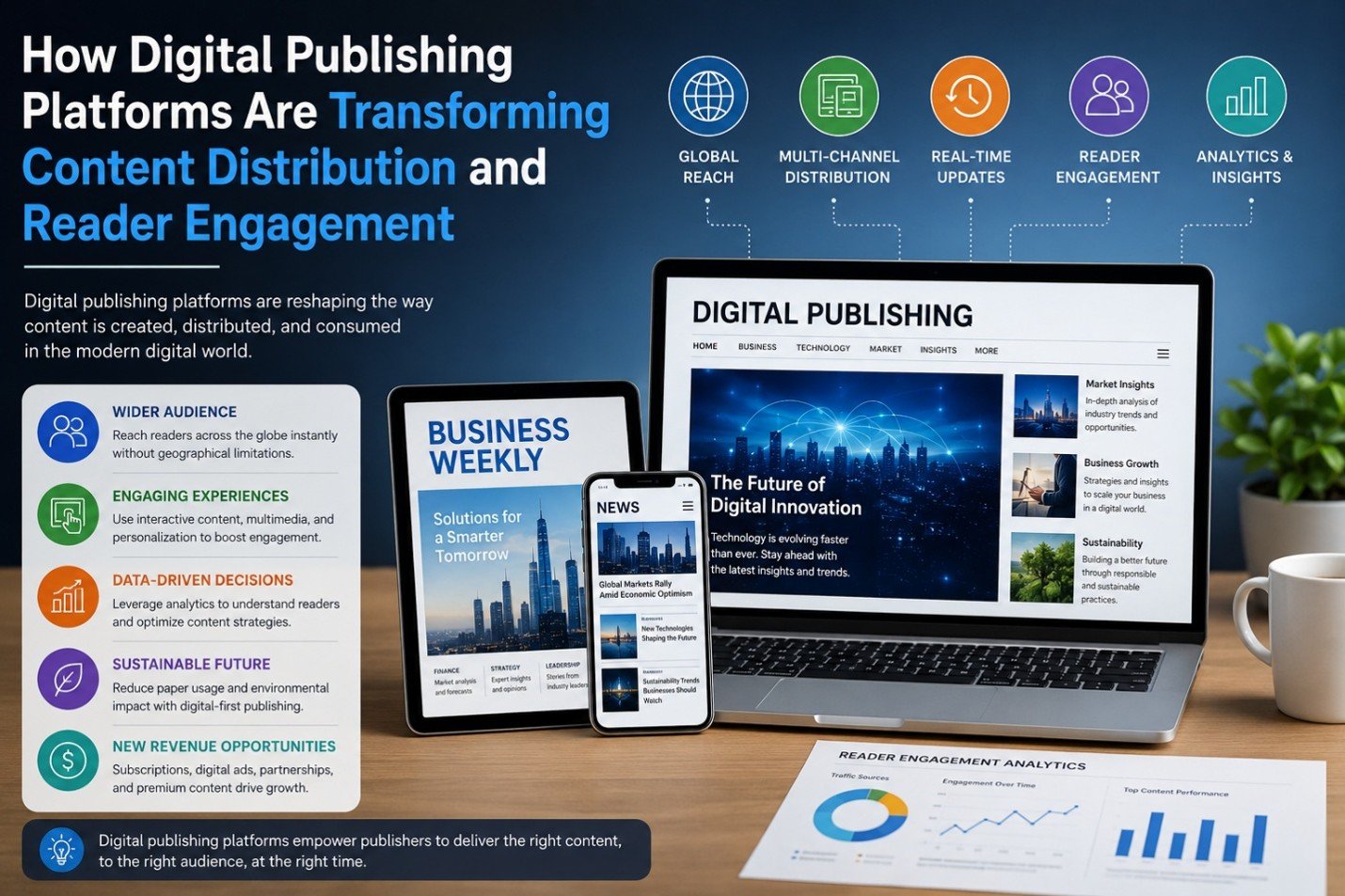
The past decade has witnessed phenomenal shifts in the publishing sector. Digital publishing solutions continue to support – and in many cases, transform – print-centric solutions for providing information across business and media applications ranging from business, news and trade magazines to ebooks. The solutions allow businesses to distribute and market content, manage digital and print assets, sell a wide variety of content to a worldwide audience, personalize the digital publishing user experience, and effectively utilize data from content consumption to improve content value and performance.
Consumer habits are continually changing as audiences spend more time on online channels.
Therefore, many companies outside the business-to-business or traditional media segments are looking to the benefits provided by digital publishing to create stronger market visibility, higher levels of audience engagement, and more efficient content distribution for educational, marketing, corporate communications and market intelligence needs.
The Rise of Digital Publishing Platforms
Online systems where anyone can create, share, publish and evaluate data within channels and on numerous devices. Digital Publishing Platforms cover all areas of digitally published content, whether an e-book, Digital Newspaper, magazine, digital newsletter, Digital Report, blog, or any of other kinds of digitally published content. Rise Of mobile phones, fast internet speeds And high internet coverage have given a spur to demand for digitally published materials.
Readers of today need quick access of contents through mobile applications and devices, to see personalized offers, and enjoy an excellent experience with minimal disruption while consuming their favourite digital materials.
Hence, it needs them to come up with flexible and reliable methods that yield results using Data and scalability. Traditional publishing is time-consuming, costly and may result in the non-availability of the produced matter for some time. Digital platforms help reduce this issue to zero since any digitally produced content may not need much effort before being available.
Transforming Content Distribution
Global Reach and Accessibility
A key benefit of digital publishing platforms. Physical books/ magazines require printing and shipping costs and logistical hassles, but not in digital! The same can be delivered to anybody in the world immediately, allowing content businesses to reach their customers all over the world with a very low overhead cost and giving customers access to what they need anywhere and anytime.
Multi-Channel Distribution
Distribution Channels Today’s publishing platforms facilitate distribution across the website, mobile apps, emails, social media channels and third party content aggregators to make your content available wherever your target audience congregates. When multiple distribution channels are used together it allows the publisher to increase reach and traffic, enhance brand visibility and leverage the efficiency of automated publishing workflows.
Real-Time Content Updates
A huge advantage of digital media publishing is the fact that you are able to publish instantly. And the ability to publish, edit and update your content instantly is something that press agencies, research firms and market intelligence service providers can appreciate. It’s quick and easy to adapt to the latest trends, industry insights, breaking stories or news events in real-time so that your audience always gets timely and up to-to-date content.
Enhancing Reader Engagement
Personalized Content Experiences
5 Key Considerations in Digital Publishing For a reader to get engrossed, a digital publisher can deliver personalized experiences by relying on data such as the reader’s profile, interaction history and the behavior that defines it. Analytics & A.I. Are leveraged for data extraction and to offer recommendations such as the personalized delivery of articles, publications and reports to match users’ particular preferences. Reader satisfactions increase with personalized experiences.
Interactive and Multimedia Content
Print media have limitations as far as interactivity. Conversely, the online versions can have multimedia functionalities, such as podcasts, videos, infographics, animations, interactive graphs and other visuals. These will make their content more attractive and comprehensible by the user, who will be able to interactive with the information received and get a learning experience that helps their retention of it. An example can be a report of the marketing research, that may have some live charts that will allow to analyse the trend of the variable.
Improved User Engagement Metrics
How Publishing Platforms Leverage Analytics A Good Example Of Digital Publishing Publishers can make use of Analytics made by Publishing Platforms to assess their readers’ engagement with the produced content. Page views, session duration, click-through, bouncing rate, pathing analysis are just some of the information they give you that you can use for actionable decisions. With these analytics you are able to re-balance your content, create popular content and keep optimising user’s reading experience.
Supporting Sustainable Publishing Practices
Digitalisation For Sustainability It’s not just our planet that needs a digital transformation, but publishing does too! Traditional print publishing creates significant waste from paper, ink, transport and storage. Digital publishing removes the need for physical materials to a large extent which helps businesses to decrease the carbon footprint of the publishing processes, a concern which every organisation is having to consider.
Some interesting evidence of this is how analysts monitor how the Paper Board Price Trend fluctuates, because these factors influence costs of packaging and printing, leading to increase prices for raw materials which can push many businesses, including many publishers, to digitise at pace and become far more efficient and reduce paper based output.
Sustainable solutions are the way forward and digital publishing makes great environmentally friendly sense for many reasons.
Monetization Opportunities for Publishers
There are various methods of monetization options outside of common subscriptions, paid models, and advertising for digital publishing platforms.
Subscription-Based Models
The vast majority of publishers offer premium subscriptions, where customers can access special, insider publications, reports, and research papers for a subscription. These types of offers provide publishers with recurrent streams of income.
Digital Advertising
Sophisticated targeting options ensure publishers can reach their desired audience. Not only will advertising improve, but new advertising revenue options become possible.
Sponsored Content and Partnerships
Brands partner with publishers more for articles, thought leadership, reports, and more. Digital allows those types of programs to occur alongside with metrics.
Paywalls and Premium Access
Letting publishers have flexible paywalls can give the ability to balance reader reach with a steady revenue. You can implement and manage a blend of free and premium articles that will grow both your traffic and income stream.
The Role of Data and Analytics
Content intelligence has turned into one of the major assets for publishers. User details created on the web to enable Publishers to come to better decisions in planning the content, segmenting their audience, optimizing campaigns and developing products based on reader insights, Publisher scan offer content that aligns with their reader’s needs and is most likely to garner user attention and engagement, Furthermore, analytical tools in the likes of Artificial Intelligence and Predictive Analytics are app lied to discover trends and foresee how will readers respond in the future with content.
Future Trends in Digital Publishing
The Digital Publishing Future Will Be Driven By Technology Which Will Look Like… AI-powered content suggestions Voice-activated content consumption AR/VR content immersion Smart personalisation technologies Blockchain-based content rights and licensing Future-forward mobile-first approach It’s an exciting time for digital publishers as these tech evolutions will make content accessible for all and also generate engagement.
Conclusion
By connecting with customers and providing personalized experiences on a global scale through real-time publishing and data insights, digital publishing has redefined how content reaches and engages audiences. Going forward, the importance of digital publishing in determining where content comes from and where content goes will only become more profound.
If a business makes the switch to digital publishing, it will gain numerous benefits from an improved audience experience and reduced operational costs, to enhanced sustainability and new potential revenue streams. As consumers increasingly turn to digital platforms and customer behaviors continue to shift, making a smart investment in these new publishing technologies will be imperative to the success of any media entity.
